TR’s unwritten code of silence
Bag of BonesTR’s unwritten code of silence is a local norm against stirring up the past, enforced less through formal rules than through warnings, unease, and shared dependence. Bill Dean describes a town where people and old events are connected beneath the surface: a question can harm those still living, and an outsider who keeps asking may become a source of trouble in his own right.
Silence as a form of protection
Bill frames the boundary around local history through the death of little Kerry Auster. He says that Normal Auster snapped for reasons nobody knows, calling the event a terrible, senseless tragedy; it is not the material for a newspaper story or magazine article, he warns, because people could still be hurt. His account does not establish that the town knows why the killing happened. Instead, it stresses the cost of probing a wound whose causes remain uncertain and whose consequences have not ended for the community.
Bill contrasts that tragedy with the story of Sara Tidwell and the other outsiders. He says they were wanderers from away, suggesting that questions about them would be less likely to bruise the town’s own residents. The distinction is telling: silence is not simply a refusal to remember everything. It reflects who belongs to the local web of ties, and who can be treated as a subject safely at a distance. The town’s past, in Bill’s account, dies slowly, and the living remain vulnerable to what is said about it.
The town as an interconnected community
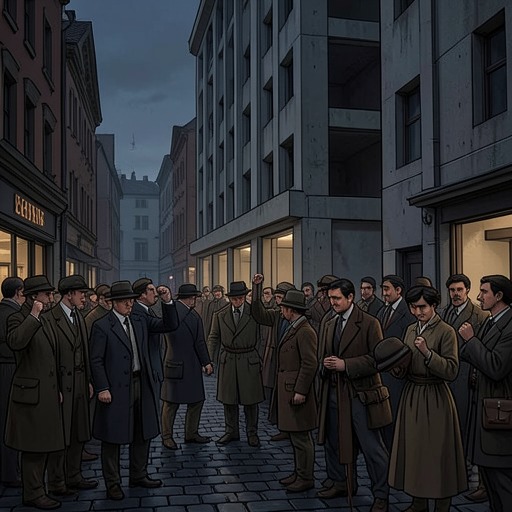
To explain why private inquiry causes public discomfort, Bill compares life on the TR to sleeping four or five people in one bed in January. If everyone lies still, the arrangement works; if one person tosses and turns, nobody can sleep. He identifies Michael Noonan as the restless person: Michael’s questions disturb a community whose members are bound together by connections that are not always visible.
That image makes the code more than a preference for discretion. It presents silence as a bargain of mutual accommodation, with the comfort of the group dependent on each person avoiding disruptive movements. Bill does not claim that every resident shares the same secret or intention. Rather, his metaphor explains how the pressure to leave matters alone can operate collectively even when its underlying connections remain obscure.
Warnings and suspicion
Bill warns Michael that people are uneasy about his interest in Mattie Devore. He distinguishes his own position from local gossip: he is not claiming that anything is happening between them, although some people say so. The warning nevertheless shows how scrutiny of Michael’s conduct becomes entangled with suspicion about his relationships. His presence is being interpreted through stories that circulate in town, not just through what he actually does.
After Max Devore’s death, Bill advises Michael to keep his head down for the next few weeks. He suggests that Michael might be better off leaving the TR until the situation settles. Michael refuses, explaining that he is writing a book and that moving could make the work die on him, as it has before. Staying therefore means continuing to work in a place where attention itself carries a social cost.
Bill then names two rumors: that Michael is living with Mattie, and that he has returned to write a hostile account of the TR by digging up its old skeletons. Michael asks who is spreading the second story. Bill does not answer. The silence in that exchange gives the code a sharper edge: the warning is not just that inquiry could hurt people, but that the community may recast the inquirer as an adversary without identifying who is making the accusation.
Limits of what can be known
The pressure to keep quiet bears directly on Michael’s attempt to understand what Johanna Noonan was investigating. Bill says he never saw anything she wrote and allows that she may not have written it down at all. Michael has not found a manuscript, but he recognizes that her visits may have been concealed from him: she made repeated trips to the area, and on one occasion a strange man accompanied her. The absence of written evidence cannot settle what she learned or whether she left a record elsewhere.
One remembered detail points toward another guarded corner of the past. Johanna had mentioned Royce Merrill, whom she described as the person who remembered the most because of his age. She had also feared that he might tell Michael more than he should know. That recollection does not reveal what the withheld information is, but it links the code’s protection of old memories to Michael’s incomplete understanding of his wife’s investigation.
The rule thus preserves a real concern for people who can still be hurt by tragedy, while also making local history difficult to examine. Its force appears in the gap between what residents may know and what they will say: a warning to step carefully, rumors that turn questioning into an accusation, and the quiet refusal to identify who wants the past left alone. The result is not proof of one coordinated conspiracy, but a social climate in which disclosure has consequences and silence can outlast the events it covers.